Chestnut
 Scanning electron microscopy — Source: Red Palinocam, Comunidad de Madrid
 Description
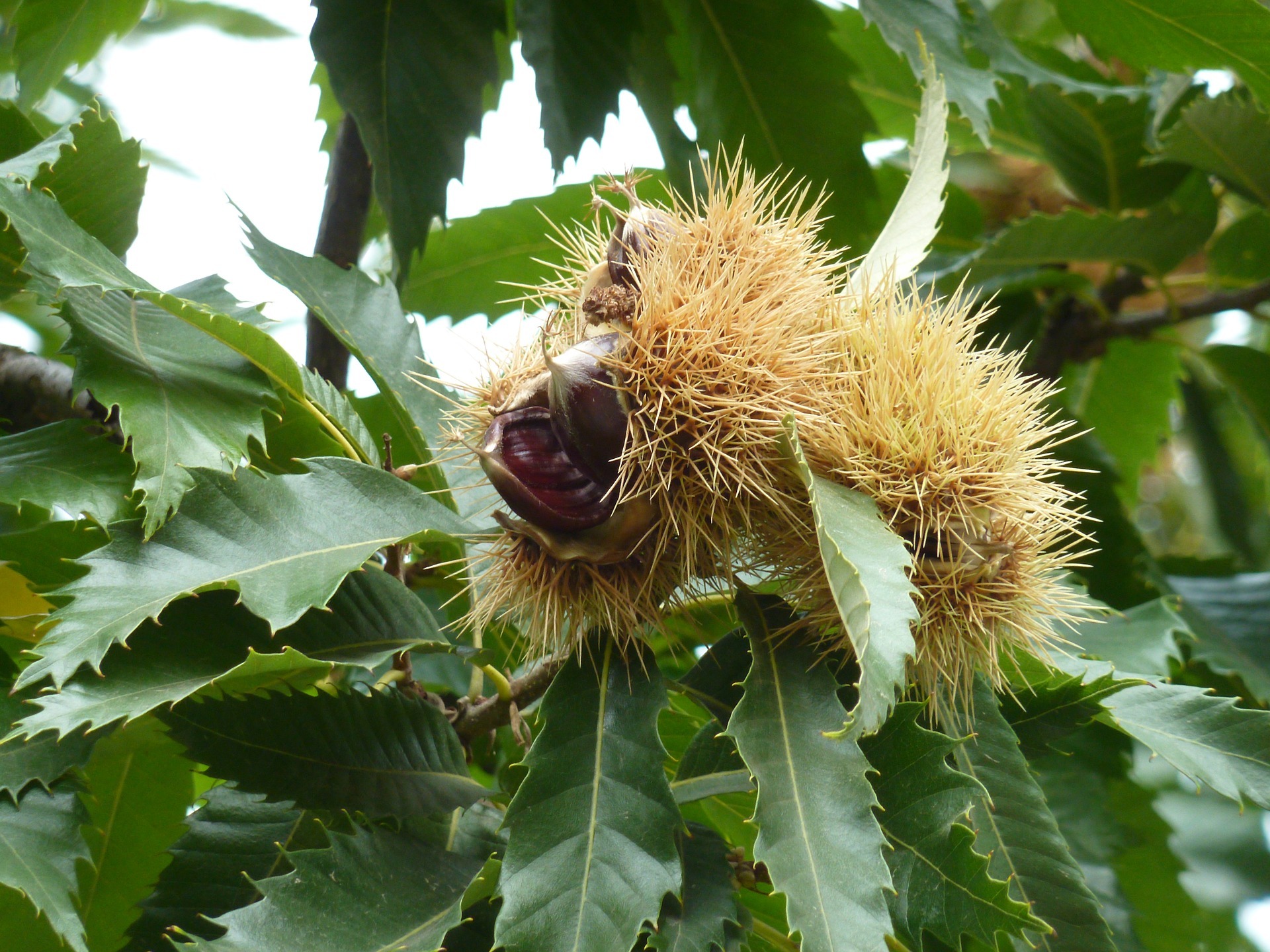
The sweet chestnut (Castanea sativa, family Fagaceae) is a large deciduous tree up to 30 m, with a robust trunk and deeply spirally fissured brown bark. Leaves are simple, alternate, oblong-lanceolate, 10-25 cm, with serrated margin. Male flowers form long erect yellowish catkins; female flowers are at the base of upper catkins, enclosed in a spiny cupule that becomes the chestnut burr.
Habitat and distribution
Requires acid (siliceous), deep, humid soils. In Madrid, present in the northern sierra (Somosierra, Montejo de la Sierra) and as an ornamental in some urban parks like Casa de Campo.
Health impact
Pollination June-July. Moderate pollen allergenicity, but clinically relevant due to the latex-fruit syndrome: latex-allergic individuals may react to chestnuts. Causes rhinoconjunctivitis and, in food syndrome cases, urticaria and angioedema.
Cross-reactivity
Cross-reactivity with Quercus and Fagus from the same Fagaceae family. Chestnut-latex syndrome involves protein homology (Cas s 5 / hevein). Also cross-reactivity with banana, avocado and kiwi.
Pollen morphology
Tricolporate pollen grain, prolate, relatively small at 12-18 μm. Psilate to slightly granular surface. Long narrow colpi. Thin exine, approximately 1 μm.
Did you know?
There are millennial chestnut trees in Spain. The flowering catkins produce a strong characteristic odor. Chestnut wood is very durable and weather-resistant, traditionally used for posts and fences.
The information on this page is for educational purposes. For any questions about allergies, consult your doctor or allergist.