Heather
 Scanning electron microscopy — Source: Red Palinocam, Comunidad de Madrid
 Description
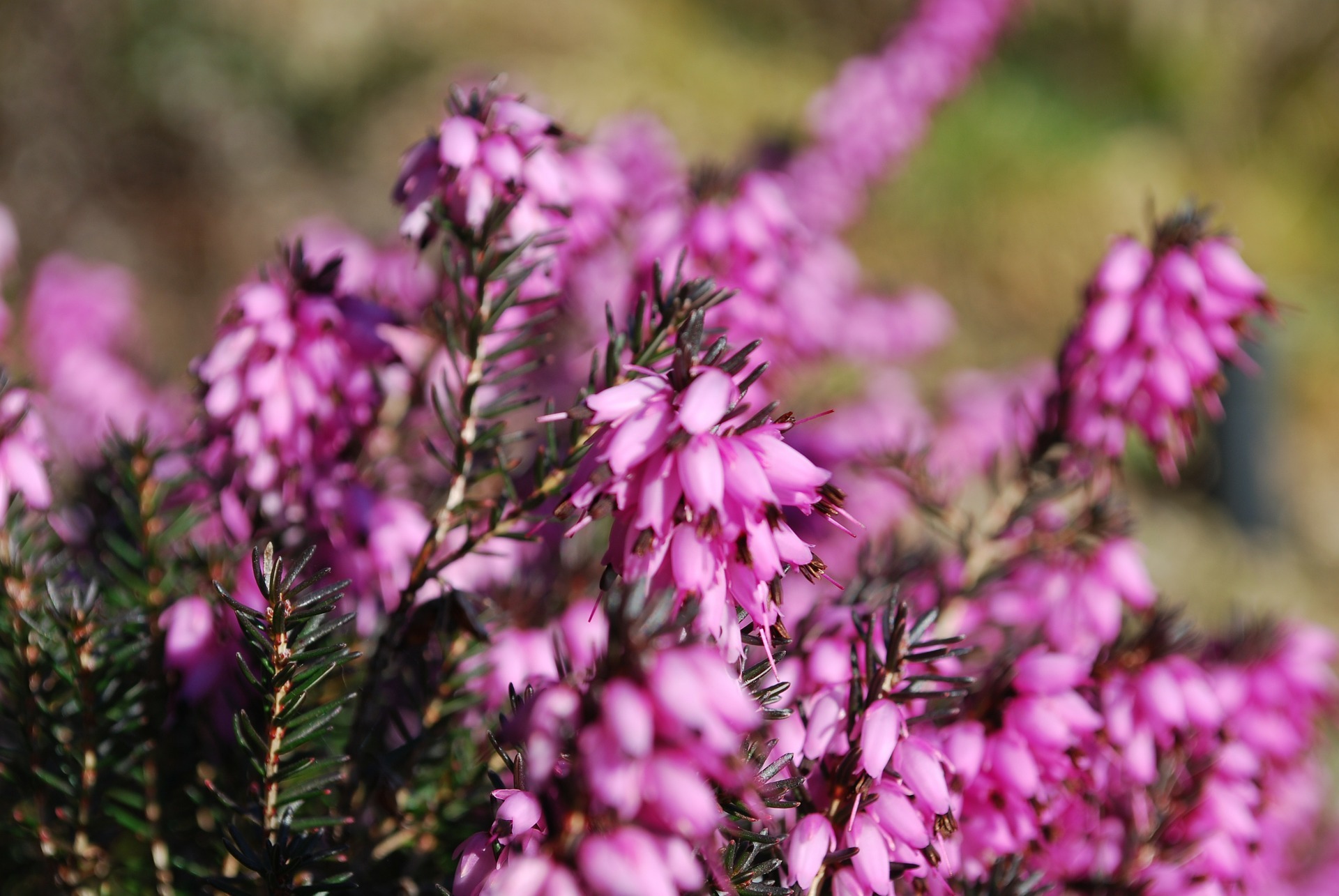
The Ericaceae family includes heaths (Erica arborea, E. australis, E. scoparia, Calluna vulgaris), strawberry trees (Arbutus unedo) and blueberries (Vaccinium). Evergreen shrubs or small trees, generally calcifuge, with small coriaceous leaves. Flowers are typically urceolate (urn-shaped). Tree heath (E. arborea) can reach 4-6 m. Strawberry tree is 3-10 m with reddish scaly bark, glossy leaves and edible red spherical fruits.
Habitat and distribution
Sierra areas with acid siliceous soils: Guadarrama, Somosierra, Lozoya valley. Heathlands form extensive shrub communities with rockroses. The strawberry tree is on Madrid's coat of arms and found in cool ravines and shaded slopes.
Health impact
Variable pollination by species: E. arborea January-April, Calluna August-October, Arbutus October-December. Low allergenicity as pollination is mainly entomophilous. E. arborea may cause mild rhinoconjunctivitis in polysensitized patients.
Cross-reactivity
Low cross-reactivity. Some antigenic community within the family but without demonstrated clinical relevance.
Pollen morphology
Tetrad pollen grain (four permanently united grains in tetrahedral structure), spheroidal to ovoid, 25-40 μm total diameter. Each individual grain is tricolporate. The tetrad is one of the most distinctive Ericaceae features, allowing immediate microscopic identification. Granular to finely verrucose surface.
Did you know?
The bear and strawberry tree on Madrid's coat of arms reference extensive groves that once surrounded the medieval town. Strawberry tree fruits ferment slightly when ripe, occasionally intoxicating animals. Heather honey is one of the most prized in the Iberian Peninsula. Tree heath roots are used to make briar smoking pipes.
The information on this page is for educational purposes. For any questions about allergies, consult your doctor or allergist.