Olive
 Scanning electron microscopy — Source: Red Palinocam, Comunidad de Madrid
 Description
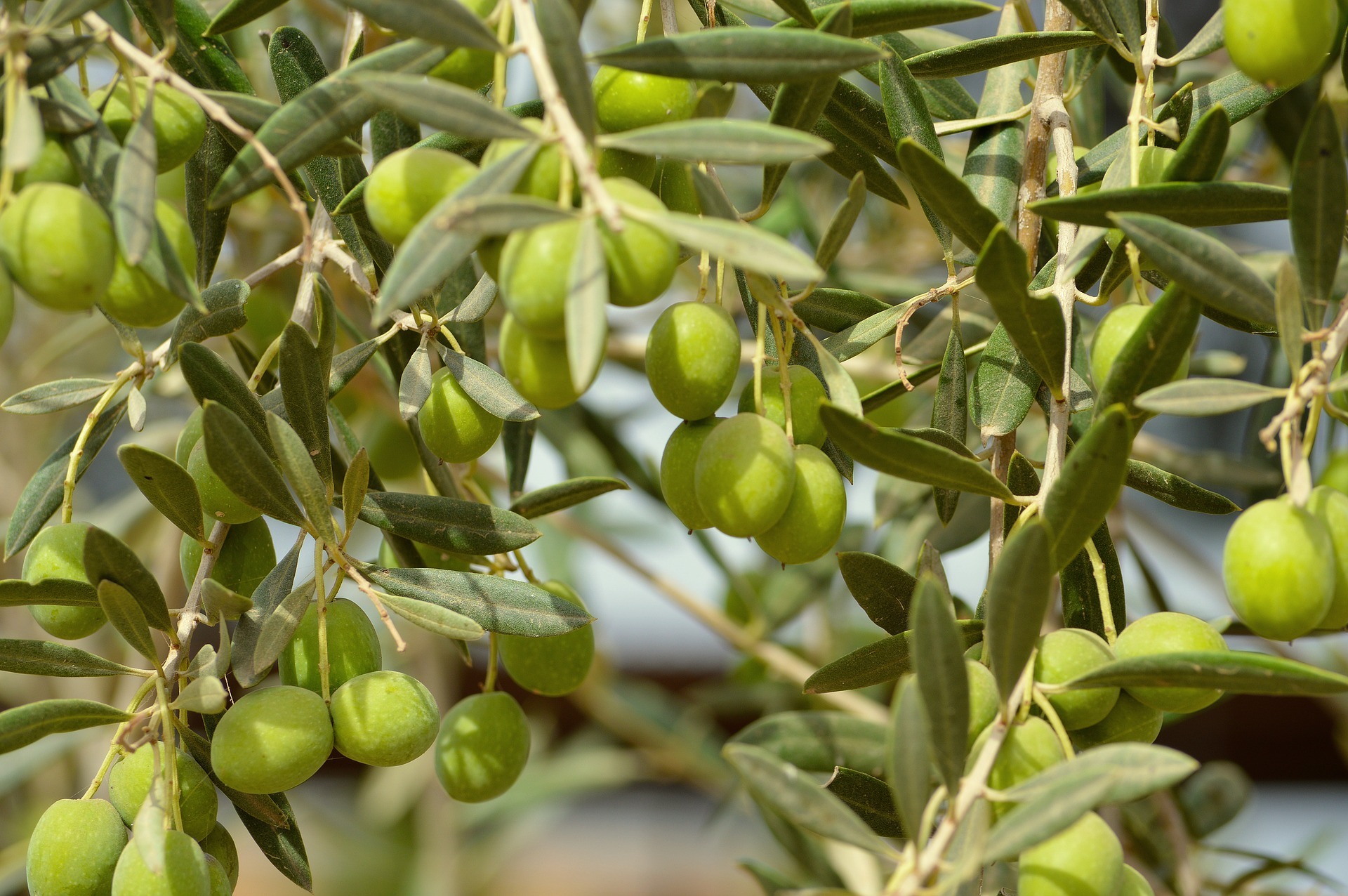
The olive tree (Olea europaea) is an evergreen tree 5-10 m tall with a tortuous trunk and grayish bark. Its opposite, simple, elliptic-lanceolate leaves (2.5-7.5 cm) have a thick cuticle, dark green above and silvery lepidote scales beneath. Flowers grow in axillary racemes. The fruit is a drupe: the olive. Cultivated for over 6,000 years in the Mediterranean basin, it can live more than 1,000 years.
Habitat and distribution
Cultivated in the dry, warm south of the Community of Madrid (Aranjuez, southeast). Much of the pollen detected in Madrid comes from extensive olive groves in neighboring regions, carried by southern air currents. Also used ornamentally.
Health impact
Pollination from April to June, with peak in May. Produces severe rhinoconjunctivitis and asthma. The Ole e 1 protein is the main allergen.
Cross-reactivity
High cross-reactivity with ash (Fraxinus), privet (Ligustrum) and lilac (Syringa), all from the Oleaceae family. Olive-ash-privet syndrome is very common in Madrid.
Pollen morphology
Isopolar, radially symmetrical, prolate-spheroidal pollen grain, 18-25 μm, trizonocolporate with long colpi and small apocolpia. Granulate apertural membrane with pore-like endoaperture and oncus. Reticulate exine 2-3 μm thick.
Did you know?
The olive tree's "vecero" (alternating good and bad harvests) also affects pollen production. Olive groves in Jaen produce so much pollen it can be detected hundreds of kilometers away.
The information on this page is for educational purposes. For any questions about allergies, consult your doctor or allergist.