Pine
 Scanning electron microscopy — Source: Red Palinocam, Comunidad de Madrid
 Description
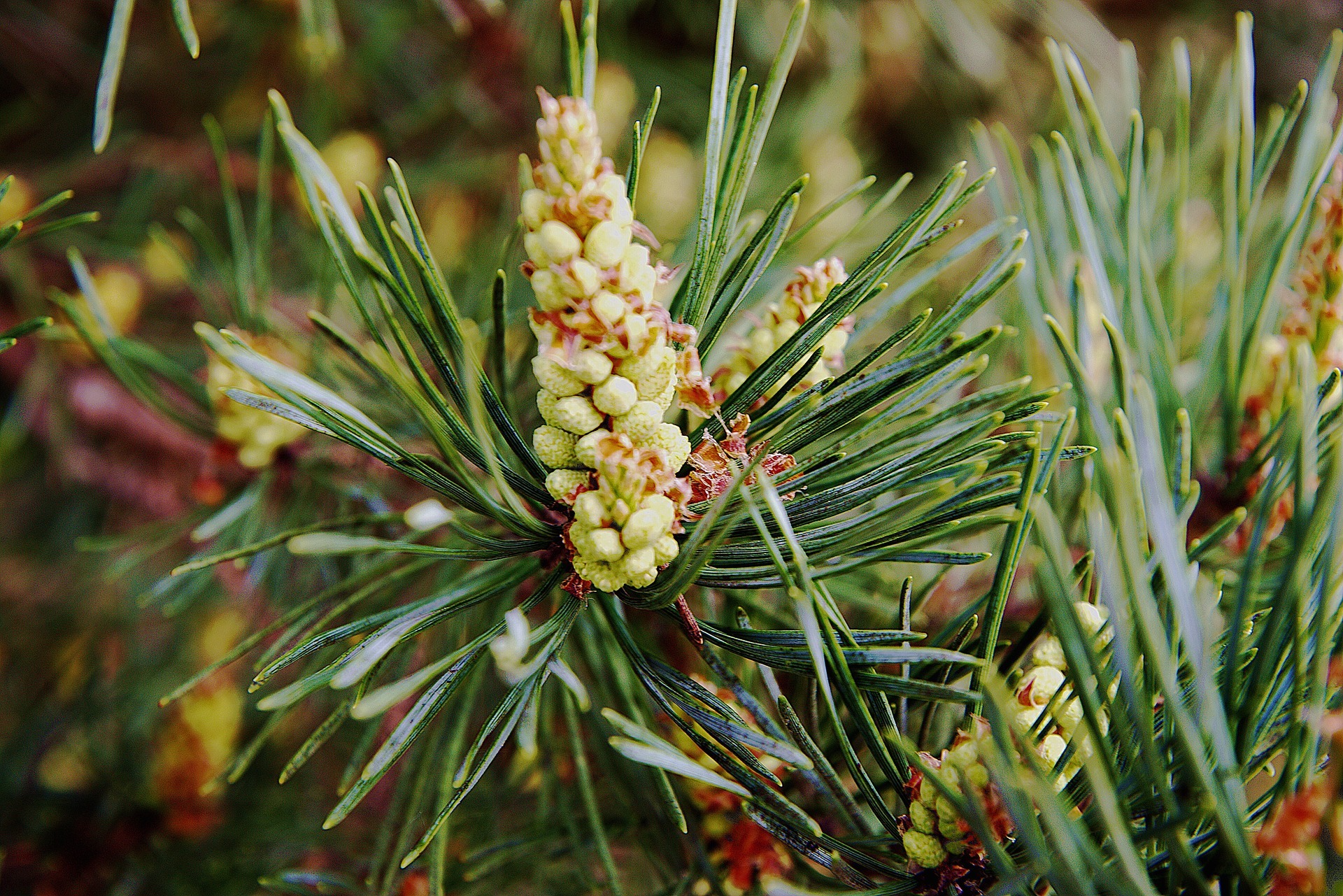
The genus Pinus (family Pinaceae) is very diverse in the Community of Madrid, with at least five species: P. sylvestris (Scots pine) dominating the high sierra; P. pinea (stone pine) with its parasol-shaped crown; P. pinaster (maritime pine); P. halepensis (Aleppo pine) on dry limestone; and P. nigra (black pine). Evergreen trees with needle-like leaves in fascicles of 2, 3 or 5. Small yellowish male cones release enormous quantities of pollen in spring.
Habitat and distribution
Pine forests are the largest forest ecosystem in the Madrid region. P. sylvestris forms vast stands in the Guadarrama sierra above 1,200 m. P. pinea occupies sandy areas in the south. P. halepensis grows on low-altitude limestone. Also present in reforestation areas and periurban parks (Casa de Campo, Monte del Pardo).
Health impact
Pollination March-May, peaking April. Despite enormous visible pollen production (yellow deposition on surfaces), allergenicity is very low. The large grains settle quickly and rarely penetrate lower airways. Seldom causes real clinical symptoms despite generating disproportionate public alarm.
Cross-reactivity
Low cross-reactivity with other pollen types, even within Pinaceae. Low allergenicity partly due to scarce allergenic proteins in the exine and rapid grain sedimentation.
Pollen morphology
Bisaccate pollen grain (with two lateral air sacs), 60-80 μm total length, one of the largest pollens. Ovoid central body with vesicles formed by separation of exine layers creating air chambers that act as floats. Reticulate surface on vesicles, verrucose on body. Unmistakable "Mickey Mouse" or peanut-with-wings shape under microscopy.
Did you know?
Pines produce so much pollen that a yellowish layer covers cars, ponds and surfaces in spring, causing disproportionate public alarm despite very low allergenicity. Air sacs allow grains to travel hundreds of kilometers; pine pollen has been found in Arctic ice cores.
The information on this page is for educational purposes. For any questions about allergies, consult your doctor or allergist.