London Plane
 Scanning electron microscopy — Source: Red Palinocam, Comunidad de Madrid
 Description
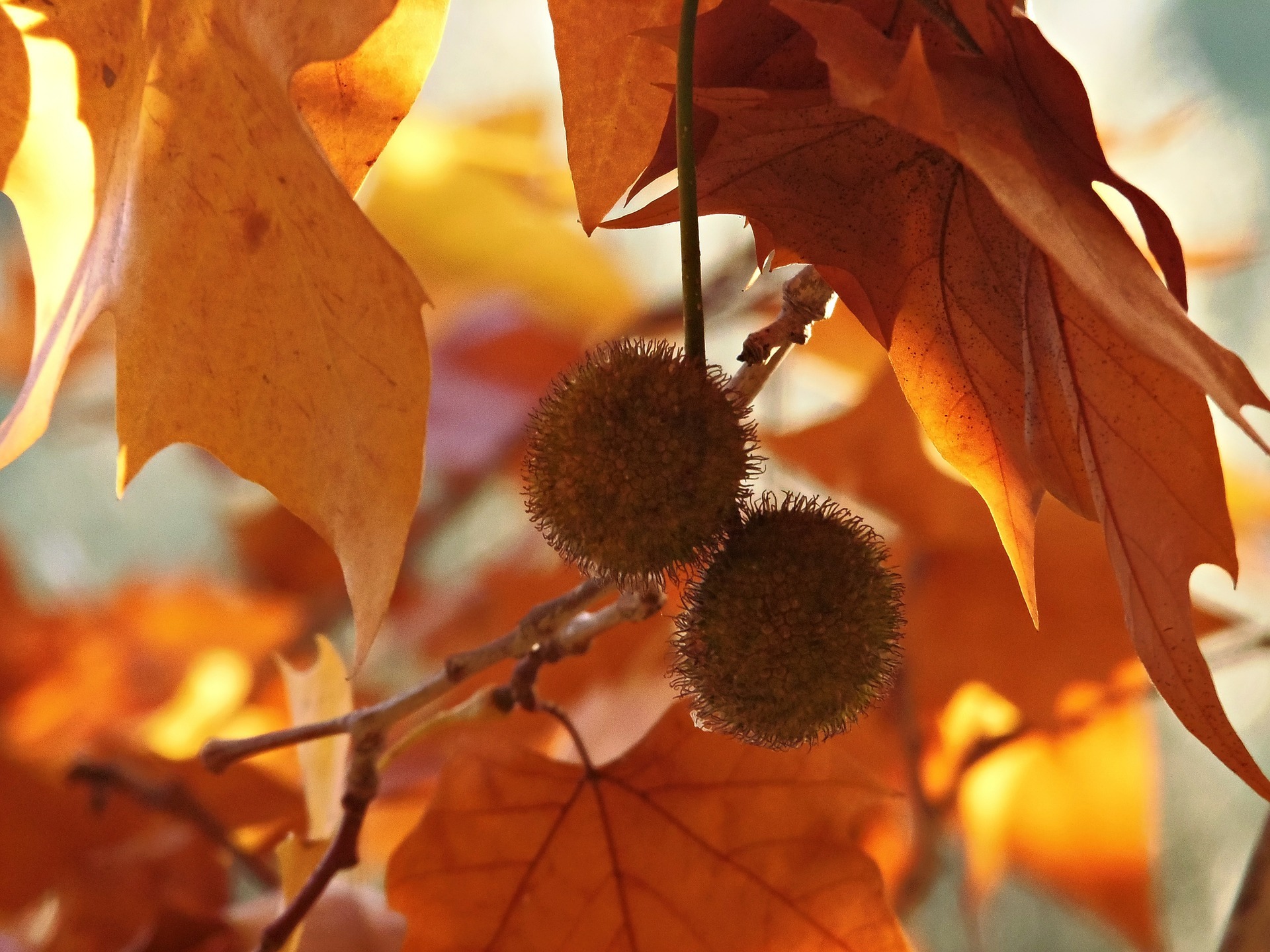
The London plane tree (Platanus × hispanica, also called P. × acerifolia) is a large deciduous tree up to 30 m tall with a straight trunk. It is a hybrid between the Oriental and Western plane trees. Recognizable by its bark that exfoliates in reddish-brown plates, leaving light patches, and by its palmate leaves with 5-7 lobes measuring 10-30 cm. Fruit achenes carry hairs (trichomes) that cause mechanical irritation when released.
Habitat and distribution
It is the most planted urban tree in Madrid and in many Spanish cities. Massively present in avenues, promenades, parks and squares. There are estimated to be more than 100,000 specimens in the city of Madrid alone.
Health impact
Produces explosive and brief pollination (mid-March to April), with peaks that can exceed 2,000 grains/m³ in just a few days. Causes intense rhinoconjunctivitis, asthma and, due to its concentration, can provoke severe asthmatic crises. Fruit trichomes add mechanical irritation to airways.
Cross-reactivity
No significant cross-reactivity with other pollen types, but the Pla a 1 protein is a recognized major allergen.
Pollen morphology
Isopolar, oblate-spheroidal pollen grain, 17-22 μm, trizonocolporate with wide colpi. Reticulate surface with granular relief. Exine approximately 2 μm thick.
Did you know?
Plane tree pollination is one of the shortest but most intense: it can last only 10-15 days, but during that period extremely high concentrations are reached. The "fluff" seen in Madrid each spring is not pollen but fruit trichomes, though they coincide and aggravate allergic symptoms.
The information on this page is for educational purposes. For any questions about allergies, consult your doctor or allergist.