Willow
 Scanning electron microscopy — Source: Red Palinocam, Comunidad de Madrid
 Description
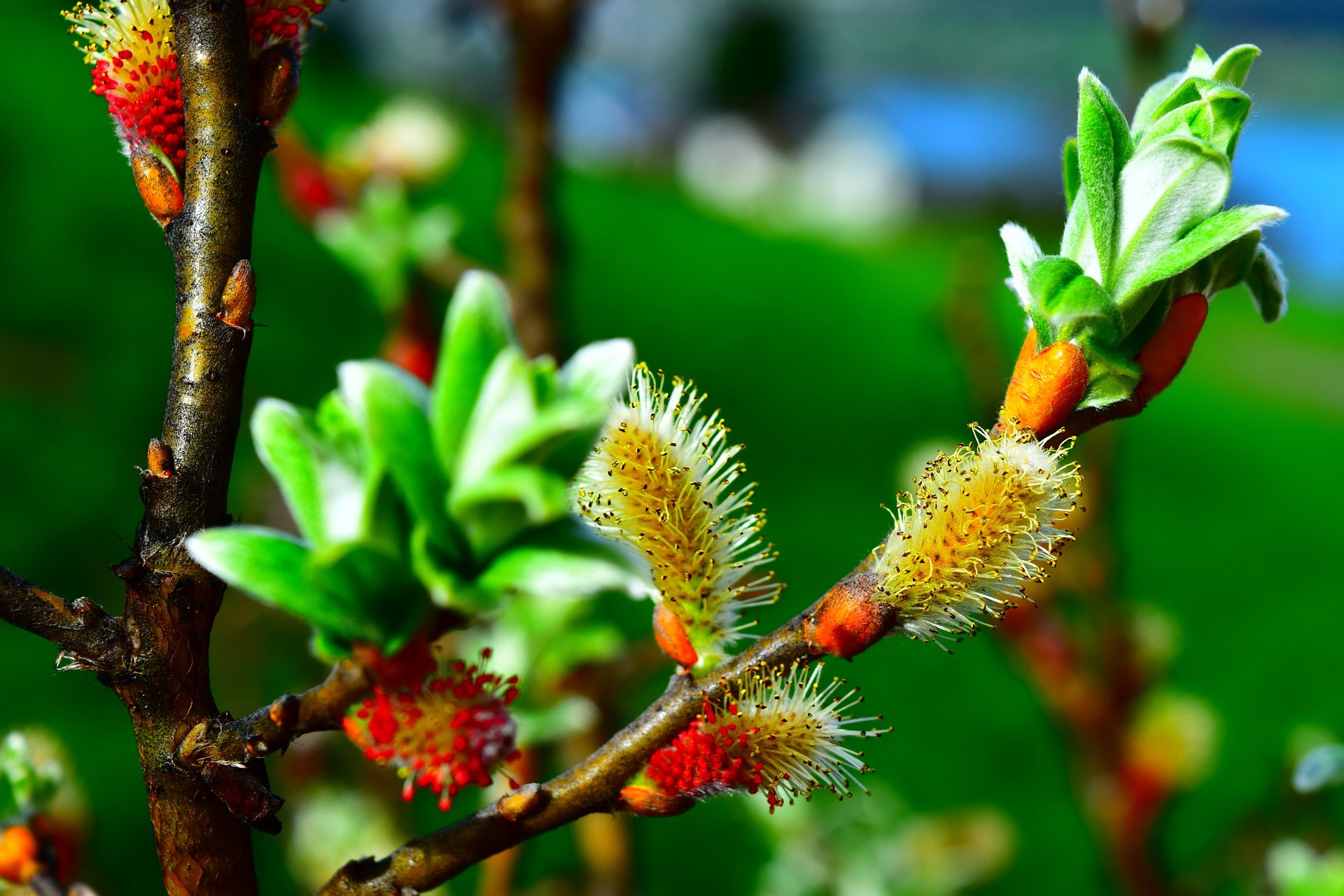
The genus Salix (family Salicaceae) includes willows (S. alba, S. fragilis, S. babylonica) and osiers (S. viminalis, S. purpurea). Deciduous riparian trees and shrubs, fast-growing, generally dioecious, reaching 10-25 m. Leaves are alternate, simple, narrowly lanceolate, finely serrate, often with silvery-silky underside. Flowers in erect catkins appearing before or with the leaves; males compact and yellowish, females elongated and greenish.
Habitat and distribution
Strictly tied to watercourses and high water table areas. In Madrid, common along the Manzanares, Jarama, Henares, Guadarrama and Tajo rivers and sierra streams. Weeping willow (S. babylonica) is planted ornamentally beside ponds and lakes.
Health impact
Pollination February-April, peaking March. Low allergenicity overall, as many species are partially entomophilous. Produces appreciable anemophilous pollen detected in samplers. Can cause mild rhinoconjunctivitis with watery rhinorrhea and moderate nasal itching in sensitized patients.
Cross-reactivity
Cross-reactivity with poplars (Populus), from the same Salicaceae family, through homologous allergenic proteins.
Pollen morphology
Tricolpate pollen grain, prolate to subprolate, 15-25 μm (variable between species). Long narrow colpi. Reticulate surface with fine regular lumina. Thin exine of 1-1.5 μm. Distinguished from Populus by well-defined colpi (Populus is inaperturate).
Did you know?
Willow bark contains salicin, a glucoside the body converts to salicylic acid. This compound was the basis for Felix Hoffmann's synthesis of acetylsalicylic acid (aspirin) in 1897. Willows were already used as natural painkillers by Egyptians and Greeks over 3,500 years ago. Osier wickerwork has been practiced since prehistory.
The information on this page is for educational purposes. For any questions about allergies, consult your doctor or allergist.